

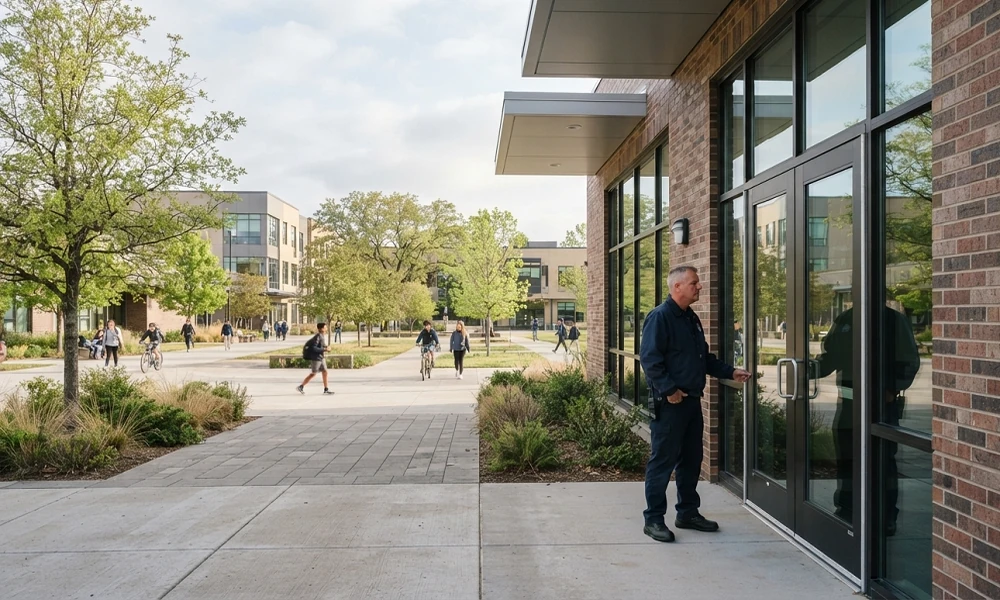
A campus entrance starts working long before the first lesson. Staff arrive, deliveries move through service areas, and students pass between buildings throughout the day. By evening, the same openings may serve sports teams, community groups, and cleaning crews. Each doorway needs to suit its location and the people using it.
That is why good doors are vital for schools. A reliable opening supports everyday movement without becoming a recurring maintenance problem. For administrators and facility managers, choosing well begins with understanding the complete system: the door, frame, hinges, closer, locking hardware, and surrounding space.
Start With the Purpose of Each Opening
A classroom entrance has different demands from a gymnasium exit or an administration lobby. Before comparing products, facility teams should record where each opening sits, how often it operates, and which problems staff encounter. Exposure to rain, afternoon sun, carts, and crowded passing periods also deserves attention.
Commercial Locks and Doors provides repair, installation, and hardware services for educational facilities. Its solutions for doors for schools include hollow metal assemblies, automatic operators, and access control options.
An opening inventory makes those choices more concrete. Instead of requesting identical products across a campus, decision-makers can identify where durability, visibility, controlled entry, or easier operation matters most. Photographs and maintenance records help a contractor understand recurring faults before recommending work.
Choose Components That Work Together
A strong door alone does not create a dependable entrance. Hinges must support its weight, the frame must remain sound, and the closer must suit the assembly. Hardware selection should reflect frequent use and the practical needs of the people maintaining it.
For school door installation, specifications should cover the complete opening. Teams should ask how proposed components fit together, whether replacement parts are readily available, and what routine servicing will involve. A lower initial quote may offer little value if it leaves damaged frames or unsuitable hardware unresolved.
Appearance matters, too. A coordinated finish can help an entrance look cared for, while appropriate glazing can support visibility. Product choices should follow the opening’s requirements, including any applicable fire rating, rather than appearance alone.
Balance Entry Control With Everyday Access
Campuses need a clear approach to who enters, where visitors report, and how staff manage access outside normal hours. Door hardware should support those procedures. CISA’s guidance on layered school security treats physical protection as a coordinated system, supported by assessment and planning.
Accessibility also belongs in the initial discussion. The U.S. Access Board’s guide to accessible entrances and doors addresses features such as clear openings, maneuvering space, thresholds, and operable hardware. These details deserve review alongside security goals, with project requirements confirmed by qualified professionals.
Because schools rely on dependable doors, usability should be considered during a normal school day. Ask how an entrance works for someone using a mobility aid, a staff member moving equipment, or a visitor unfamiliar with the building.
Know When Replacement Deserves Consideration
A sticking leaf or faulty closer does not automatically mean the entire assembly needs replacement. Some issues can be addressed through adjustment or component repair. The useful question is whether the underlying door and frame can still support dependable operation.
Planning for school door replacement becomes more relevant when damage is extensive, faults return after repairs, or an existing assembly cannot accommodate the intended upgrade. A documented assessment helps distinguish a serviceable opening from one that keeps consuming maintenance time.
When replacing doors at your school, ask for a scope that identifies what will be retained and what will change. Include frame condition, finishes, hardware, disposal, and testing. This makes competing proposals easier to compare and reduces uncertainty once work begins.
Plan for Handover and Continued Care
Installation planning should account for classes, examinations, deliveries, and evening activities. Agree on work areas, temporary routes, and who will coordinate access with the contractor. Confirm product availability before committing to a holiday installation window.
At handover, request an operating demonstration, maintenance instructions, and a clear record of installed products. Staff should know how to report scraping, slamming, loose hardware, or unreliable latching. Keeping observations against each opening’s identifier makes future service visits more focused.
Commercial Locks and Doors offers campus maintenance services alongside repairs and upgrades. For facility teams, that creates an opportunity to discuss both the immediate project and the ongoing attention its components will need.
A well-planned entrance investment starts with the building’s actual demands. Visit Commercial Locks and Doors to discuss campus needs and request an estimate for a practical door improvement plan.
