

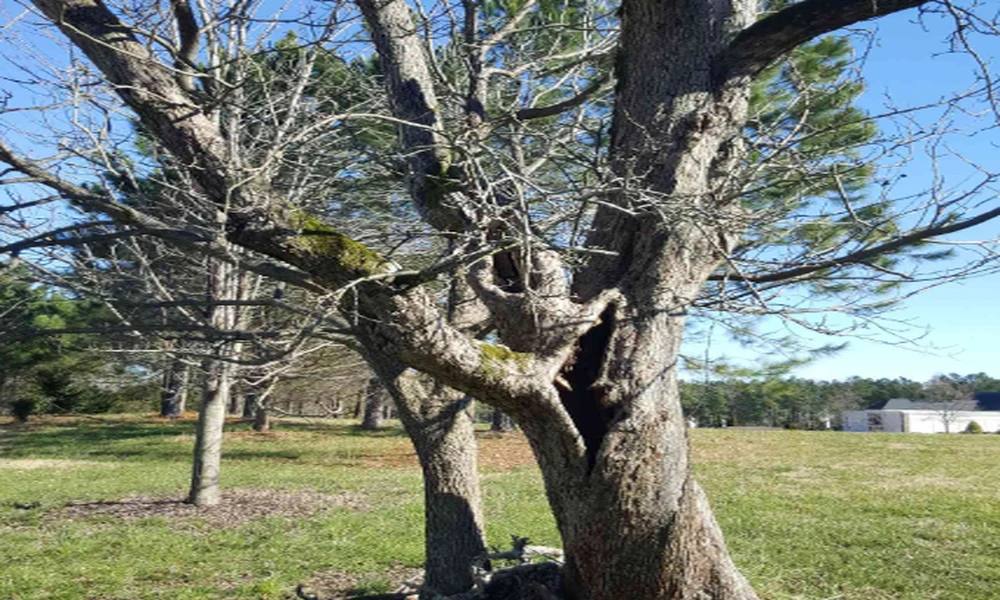
A bare branch. Loose bark near the base. A lean you do not remember seeing before. Changes like these can leave you wondering whether your tree is struggling or simply going through a normal seasonal change.
Knowing the signs a tree is dead can help you decide when to seek advice. But one symptom rarely tells the whole story. A tree can lose a few branches and remain healthy, while another can have green leaves and serious problems inside its trunk or roots.
At Arbor Wise Tree Service, we encourage homeowners to look at the whole tree, including what is around it. The goal is to understand whether the tree can be cared for or whether removal is the safer choice.
Key Takeaways
- Bare branches alone do not prove a tree is dead.
- Widespread dieback, dry twigs, and a lack of new growth deserve attention.
- A sudden lean, lifting roots, or a fresh trunk split needs prompt assessment.
- Fungal growth and bark loss can have different causes.
- A scratch test checks one small area, not the health or safety of the whole tree.
- Keep away from unstable trees and damaged limbs, especially near power lines.
What Are the Main Signs a Tree Is Dead or Dying?
The most noticeable changes often appear in the canopy, which is the upper area made up of branches and leaves. A tree that stays mostly bare during its normal growing season may be in serious decline.
Other clues include:
- Several large branches with no new leaves or buds.
- Extensive twig dieback across the canopy.
- A dead top or steadily thinning foliage.
- Large areas of missing bark with dead wood beneath.
- Decay, cavities, or damaged roots alongside declining growth.
These signs need to be considered together. A single dead branch does not mean the entire tree has died. Widespread decline, though, is a good reason to arrange an inspection.
Also, a tree does not need to be dead to be hazardous. Structural damage can matter just as much as the condition of its leaves.
How Can You Tell Whether a Tree Is Dead or Dormant?
A dormant tree is resting between periods of active growth. Depending on the species and season, it may lose its leaves and look lifeless for a while.
Start by identifying the tree and checking when it normally produces new growth. In Florida, leaf-drop patterns vary by species, so a bare canopy is not automatically unusual.
If the tree has no obvious hazards and a small twig is safely within reach, these checks may offer clues:
- Buds: Living buds may look firm and full rather than dry and shriveled.
- Twig flexibility: A living twig may bend slightly, while dead wood often feels brittle. This varies by species.
- Scratch test: Gently scratch a tiny spot on a small twig. Moist, green tissue suggests that area is alive. Dry, brown tissue suggests it may be dead.
Do not strip bark from the trunk or climb to reach a branch. A scratch test tells you about the spot you checked. It cannot confirm that the roots are healthy or that the tree is stable.
Do Dead Branches Mean the Whole Tree Has Died?
No. Trees can lose branches because of shading, storm damage, pests, disease, or other stress.
What matters is the size, location, and pattern of the damage. A few small dead twigs are different from several large dead limbs over a driveway.
Look for changes over time:
- Is dieback spreading?
- Is the upper canopy becoming thinner?
- Are large branches dying on one side?
- Are limbs breaking or hanging in the canopy?
One-sided dieback can be linked to root or trunk damage on that side. An arborist can look beyond the branch itself to assess the cause.
Avoid standing beneath dead limbs to inspect them. View the canopy from a safe distance or use your phone’s zoom.
Does Fungus on a Tree Mean It Needs Removal?
Not always. Fungal growth needs to be identified and assessed in context.
Mushrooms in mulch may be feeding on buried organic matter. Shelf-like growths attached to a trunk or major root can indicate wood decay.
Pay attention to:
- Conks or shelf-like growths on the trunk.
- Mushrooms emerging directly from the base or roots.
- Soft or crumbling wood near old wounds.
- Cavities alongside declining growth.
Decay can affect supporting wood even when the canopy still looks green. Removing visible mushrooms will not repair decay inside the tree.
An arborist can assess the type and location of the growth and whether further investigation is needed. Fungus is a reason to look closer, not an automatic removal order.
Is Peeling Bark a Warning Sign?
Some trees naturally shed bark as they grow. Small peeling patches may be normal for the species.
Bark can also loosen after weather damage, physical injury, or disease. The surrounding symptoms help explain what is happening.
Arrange an assessment if bark loss appears with dead branches, exposed decaying wood, or a deep split. A fresh crack that opens through the trunk deserves more attention than harmless peeling on the outer surface.
Do not pull away large pieces of bark to investigate. Take photos from a safe position and note when the change appeared.
Which Tree Problems Need Urgent Attention?
Sudden changes are especially concerning. A tree that has leaned for years is different from one that shifts after a storm.
Urgent warning signs include:
- A new or rapidly increasing lean.
- Soil lifting, heaving, or cracking around the base.
- Roots pulling out of the ground.
- A fresh split in the trunk or between large stems.
- A broken limb hanging over an occupied area.
A new lean with disturbed soil may indicate that the root system is losing its hold. Keep people and pets away and seek prompt professional help.
If a tree or branch is touching a power line, stay clear and contact the utility. For an immediate threat to people, contact emergency services.
No visual checklist can predict exactly when a tree will fall. These signs are reasons to act, rather than wait for certainty.
When Is Tree Removal the Better Option?
Removal may be appropriate when a tree is dead, badly damaged, or has a risk that cannot reasonably be reduced through other measures.
The decision should consider three things: the likelihood of a tree or branch failing, whether it could hit someone or something, and the possible consequences.
A dead tree beside a home needs different treatment from a standing dead tree in a remote area. Where they can safely remain, dead trees can provide valuable wildlife habitat.
For living trees, options may include pruning, care for the underlying problem, monitoring, or a professionally designed support system. These measures are not suitable for every defect and cannot make every tree safe.
At Arbor Wise Tree Service, we encourage an assessment before deciding on removal. The right choice depends on the tree’s condition and its location.
What Should You Do If You Think Your Tree Is Dying?
Start with safe observations rather than hands-on testing.
- Take photos of the canopy, trunk, and base from a safe distance.
- Note whether the changes appeared suddenly or developed over time.
- Mention recent storms, digging, construction, or changes in drainage.
- Keep people away from damaged limbs and suspected unstable trees.
- Arrange an inspection with a qualified arborist.
Do not climb the tree, cut large limbs yourself, or try to pull a leaning tree upright.
Contact Arbor Wise Tree Service to discuss your concerns and the next steps. Clear photos and a short history of the problem can help explain what you have noticed, though they do not replace an on-site assessment.
FAQs
Can a tree have green leaves and still be dangerous?
Yes. Leaves show that parts of the tree are functioning, but they do not prove that its trunk, branches, or roots are structurally sound.
Does one brown scratch test mean the tree is dead?
No. It may indicate that the tested twig is dead. Other parts of the tree may still be alive, so one result should not decide whether the tree needs removal.
Should every dead tree be removed?
Not necessarily. A standing dead tree may be retained for wildlife where it poses no unacceptable risk. Trees within falling distance of people, buildings, or frequently used areas need careful assessment.
Can a dying tree recover?
Sometimes. Recovery depends on the cause, the species, and the extent of the damage. A tree with manageable stress may improve, but dead wood does not become living wood again.
Should I wait until a storm passes to report a dangerous tree?
Report an urgent concern as soon as you can do so safely. Keep away from the tree during severe weather. An inspection or removal may need to wait until conditions allow the work to be done safely.
This post was written by a professional arborist at Tree Trimming Clearwater Florida. Robert Miller is the owner of Arbor Wise Professional Tree Care, a locally owned and operated tree service company that offers superb lawn care by the most experienced Arborists. Arborwise Tree Services is a tree removal company that offers stump removal, tree pruning, stump grinding, fertilization, and tree restoration. We have an extraordinary lawn care industry notoriety covering the Pinellas county area.
