

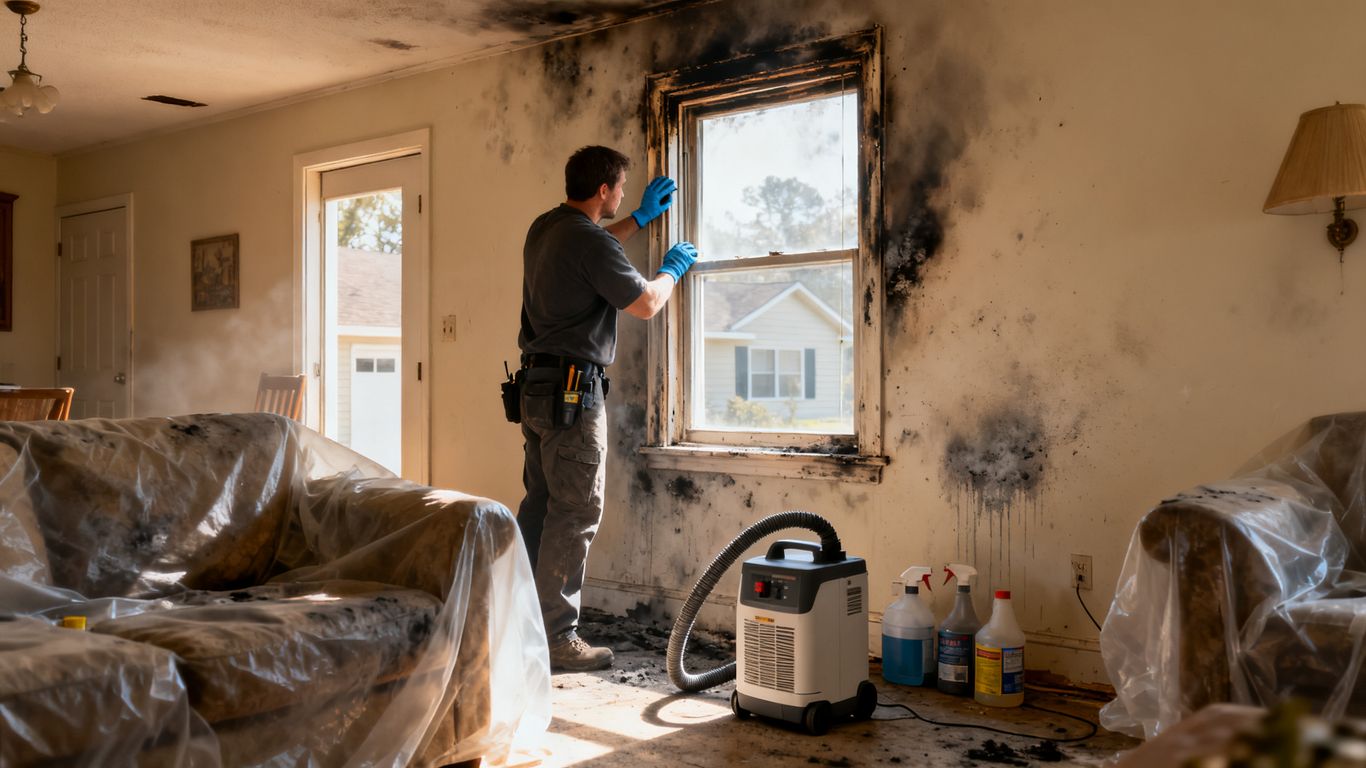
Cleaning home after wildfire smoke exposure should begin with assessment, not scrubbing. Smoke can travel through small openings, while ash and soot may settle on surfaces far from visible fire damage. A careful first review helps protect health, preserve evidence, and prevent unnecessary disposal.
Identify smoke, soot, and ash damage
Look for gray or black residue on walls, ceilings, window frames, cabinet interiors, and the tops of doors. Smoke odor may also indicate contamination in areas that appear clean, including insulation, wall cavities, upholstery, and ductwork. Note staining, corrosion, melted materials, and changes in texture as well as loose ash.
Check whether the home is safe to enter
The home should not be entered until local authorities or qualified professionals have determined that it is structurally safe. Damaged roofs, unstable walls, exposed wiring, broken glass, gas leaks, and hidden hot spots can make cleanup dangerous. Before returning, review safe re-entry guidance and follow local air-quality and emergency instructions.
Document damage for insurance and restoration claims
Photograph each affected room before moving or cleaning anything, using wide views and close-ups of residue, damaged contents, and structural problems. Make a written inventory with approximate dates, original costs, and current condition where those details are available. Keep receipts for temporary housing, protective equipment, cleaning supplies, and restoration services.
Decide what can be cleaned, discarded, or professionally restored
Some hard, nonporous items can be cleaned, while deeply charred materials and heavily contaminated porous contents may not be recoverable. Valuable documents, artwork, heirlooms, electronics, and furniture often need an evaluation before disposal. Separating salvageable belongings from clearly damaged materials also reduces cross-contamination during the work.
Protect your health during cleanup
Smoke and ash can irritate the eyes, skin, lungs, and cardiovascular system, even after visible smoke has cleared. Cleanup becomes safer when exposure is limited, contaminated areas are isolated, and work is paced rather than rushed. Household members with asthma, heart disease, or other respiratory concerns may need individual medical advice before entering.
Use appropriate personal protective equipment
A properly fitted N95 or comparable particulate respirator can reduce inhalation of fine particles, but it does not make an unsafe structure safe. Wear gloves, eye protection, long sleeves, and sturdy footwear; change contaminated clothing and wash exposed skin after each work period. Wildfire smoke safety guidance can help households plan for respirators, air alerts, and other exposure controls.
For routine cleanup, a compact set of precautions is easier to follow consistently:
- Use a properly fitted particulate respirator rather than a cloth face covering.
- Wear disposable or washable gloves and eye protection when handling ash or soot.
- Keep cuts covered and wash hands before eating, drinking, or touching the face.
- Take regular breaks in a clean area and stop work when conditions worsen.
These measures reduce exposure, but they do not replace structural assessment or professional containment when contamination is extensive. Respirators also require a suitable fit and may not be appropriate for every person, so medical guidance is sensible when there is an underlying health condition.
Keep children, older adults, and pets away from contaminated areas
Children, older adults, and pets should stay out of rooms with ash, soot, strong odor, or active demolition. Close doors, use temporary barriers, and keep contaminated shoes and clothing away from living spaces. Pets can carry particles on their fur and paws, so they should be cleaned according to veterinary advice after exposure.
Recognize health symptoms that require medical attention
Persistent coughing, wheezing, chest tightness, shortness of breath, unusual fatigue, dizziness, confusion, or worsening asthma symptoms warrant prompt medical attention. Severe breathing difficulty, chest pain, fainting, or blue lips requires emergency care. People with known heart or lung conditions should follow their clinician’s wildfire-smoke plan rather than relying on general cleanup advice.
Avoid unsafe cleaning methods that spread ash and soot
Dry sweeping, leaf blowers, compressed air, and ordinary vacuums can send fine particles back into the air. Damp wiping and wet mopping are generally less disruptive for indoor surfaces, while ash outdoors should be handled gently and in accordance with local instructions. A pressure washer can spread contaminated material before it is adequately wetted, and mixing cleaning chemicals can create dangerous fumes.
Improve indoor air quality first
Air cleaning should happen before detailed surface work because movement, heat, and foot traffic can redistribute settled particles. The goal is to create a cleaner area where residents can take breaks and to keep contaminated air from circulating through the rest of the home. Outdoor smoke conditions must guide decisions about windows, doors, and mechanical ventilation.
Ventilate only when outdoor air conditions allow
Opening windows can help when outdoor air is cleaner than indoor air, but it can worsen conditions during an active smoke event. Check current local air-quality information before ventilating and close openings when smoke rises. Fans should not be used to blow contaminated air through the home or toward occupied rooms.
Use air cleaners with HEPA and activated carbon filters
A portable air cleaner with a HEPA filter can capture fine particles, while activated carbon can help reduce some odors and gaseous pollutants. Place units in occupied clean areas, keep doors and windows closed when outdoor air is poor, and follow the manufacturer’s filter-change instructions. Air cleaning supports cleanup but does not remove residue from walls, contents, or building materials.
Replace HVAC filters and inspect the ventilation system
A contaminated or overloaded HVAC filter can restrict airflow and allow particles to circulate. Turn off the system before inspecting it, replace the filter with one suited to the equipment, and ask a qualified technician to examine ducts or components if smoke entered the system. Duct cleaning is not automatically needed in every home, and aggressive cleaning can disturb settled contamination.
Control soot movement between clean and contaminated rooms
Establish a clean zone for food, medication, clothing, and rest, then limit traffic into affected rooms. Use separate shoes, tools, and cleaning cloths where possible, and bag contaminated clothing before laundering it. Work from cleaner areas toward dirtier ones so particles are not repeatedly carried into rooms that have already been treated.
Clean hard surfaces and structural areas
Hard surfaces usually respond better to controlled, damp cleaning than to dry methods. Cleaning should proceed from the ceiling downward and from less affected rooms toward heavily affected spaces. The correct product and technique depend on the finish, the material, and whether the surface has been weakened by heat or water.
Remove loose ash without spreading particles
Wear protective equipment and gently collect loose ash with a HEPA-filtered vacuum designed for fine particles or with damp disposable materials. Avoid rubbing dry residue into painted surfaces, unfinished wood, grout, and fabric. Seal collected debris in appropriate bags or containers and follow local disposal requirements.
Wash walls, ceilings, floors, and fixtures
Test a small hidden area before washing a broad surface, since water and detergent can change paint, wallpaper, wood finishes, and flooring. Use clean cloths and solution frequently, changing the rinse water when it becomes dark. Ceilings and upper walls should be addressed first, followed by fixtures, walls, and floors so falling residue does not soil finished areas again.
Address smoke residue on cabinets, doors, and windows
Clean cabinet faces, hinges, door edges, window tracks, screens, and trim because residue often collects in seams and hardware. Mild detergent may be suitable for some washable finishes, while delicate coatings require a material-specific approach. Remove and clean filters, liners, and removable hardware separately when doing so will not damage them.
Handle porous materials that absorb smoke
Wood, drywall, insulation, carpet, foam, and unfinished masonry can retain particles and odor below the visible surface. Strong odor, staining, swelling, or repeated residue after cleaning may indicate that removal or sealing is more appropriate than additional washing. A restoration professional can assess materials that are difficult to clean without spreading contamination or causing secondary damage.
Restore furniture, clothing, and household contents
Contents should be sorted by material, value, condition, and exposure rather than cleaned all at once. Smoke residue can become harder to remove when it is heated, wetted incorrectly, or left in contact with a finish. Keep an inventory as items move through cleaning, drying, storage, or disposal.
Clean washable fabrics and clothing
Take smoke-affected clothing and linens outdoors only when air conditions permit, and avoid shaking them inside the home. Follow care labels, wash items separately at first, and inspect them after drying before returning them to storage. Several gentle cycles may be preferable to one aggressive treatment, especially when dyes and finishes are vulnerable.
Treat upholstered furniture, mattresses, and rugs
Upholstery, mattresses, and rugs can hold smoke particles deep in padding and backing. Surface vacuuming alone may not address the full contamination, and moisture can create mold or staining if drying is slow. Valuable or heavily affected pieces should be evaluated by a contents-restoration specialist before they are discarded or treated.
Evaluate electronics, appliances, and personal belongings
Ash and soot can enter electronics, motors, vents, and switches, where later use may cause failure or additional damage. Disconnect affected equipment and do not power it on until it has been inspected. Books, photographs, artwork, musical instruments, and other irreplaceable belongings also benefit from prompt, material-specific handling.
Prevent mold while cleaning water-damaged items
Fire suppression water, leaks, and humid storage can create a second problem while smoke cleanup is underway. Move wet contents to a safe, ventilated drying area when possible, separate items that can be dried from those already showing growth, and monitor humidity. Porous materials with extensive mold growth may require removal, containment, and professional treatment.
Remove persistent smoke odors
Odor removal is more successful when the source is cleaned or removed instead of merely masked. Smoke compounds can remain in porous contents, dust, insulation, and concealed cavities long after visible soot is gone. A lingering smell after surface cleaning is useful evidence that the assessment is incomplete.
Find hidden sources of odor
Inspect attics, crawl spaces, closets, cabinet interiors, HVAC components, wall penetrations, and areas behind appliances. Odor can also remain in carpet padding, upholstery, insulation, and unfinished wood. A room-by-room odor log helps identify patterns that may be missed when the entire home smells alike.
Use cleaning agents suited to the affected material
Choose a cleaner based on the surface, finish, residue, and manufacturer’s care instructions. Degreasers may help with some smoke films, but they can damage paint, plastics, wood coatings, and natural fibers. Never combine bleach, ammonia, solvents, or other products, and use ventilation only when outdoor air quality makes it appropriate.
Understand when ozone and other odor treatments are unsafe
Ozone-generating devices can irritate the lungs and may react with indoor materials to create additional pollutants. They should not be operated in an occupied home, and improvised chemical treatments can create similar risks. Odor treatment is not a substitute for removing contaminated material or correcting a ventilation problem.
Know when thermal fogging or specialized deodorization is necessary
Thermal fogging and other specialized treatments require trained operators, controlled access, and a clear understanding of the affected materials. They may be considered after residue and odor sources have been addressed, not as a first response to visible soot. A professional assessment can determine whether deodorization is suitable, what must be protected, and how the home will be ventilated afterward.
Work with wildfire smoke restoration professionals
Professional help is appropriate when damage extends into structural materials, HVAC systems, insulation, or valuable contents. It is also useful when the home has combined smoke, ash, water, mold, or electrical damage. A qualified team can coordinate cleaning and documentation while reducing the risk of spreading contamination.
Know which damage requires professional equipment
HEPA containment, specialized vacuums, negative-air equipment, contents-cleaning systems, and odor-control tools may be needed for extensive contamination. Structural drying and controlled demolition require additional judgment when walls, floors, or insulation have been wet. Homeowners should avoid opening concealed spaces or disturbing suspect materials without an assessment.
Choose a qualified smoke and fire restoration company
Ask for a written scope, proof of insurance, relevant training, references, and a clear explanation of proposed methods. The company should distinguish cleaning from demolition, repairs, deodorization, and post-cleaning verification. A fire damage cleanup guide can provide useful recovery context while the homeowner compares scopes and asks questions.
Coordinate cleaning, repairs, and insurance coverage
Notify the insurer promptly and preserve photographs, inventories, estimates, invoices, and communication records. Restoration work should be coordinated with structural repairs so cleaned contents are not returned to a dusty or odor-contaminated space. Smoke damage insurance guidance can help homeowners understand inspection, remediation planning, contents coverage, and post-cleaning testing.
Verify that the home is safe to reoccupy
Reoccupancy should follow completion of structural, electrical, air-quality, and contamination checks appropriate to the damage. The home should be free of active hazards, cleaned areas should remain separated from unfinished work, and repaired ventilation equipment should operate properly. The restoration company and relevant authorities should clearly explain any remaining restrictions before residents, children, older adults, or pets return.
