

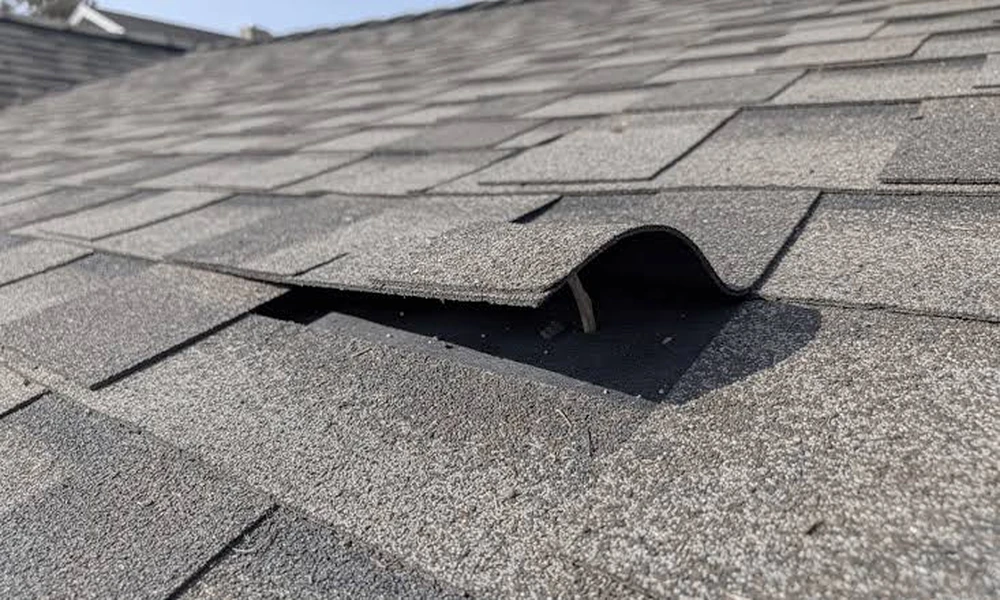
Most roof damage does not announce itself with a ceiling collapse or a river of water in the living room. It starts quietly: a lifted shingle, a dried-out bead of sealant, a faint stain in the corner of a closet. Because homeowners rarely climb up and look, these early signs can go unnoticed for years while moisture slowly works its way into the structure. Learning to spot them from the ground, and knowing when to bring in a trusted St. Joseph roofer, can turn a minor repair into the difference between a small invoice and a full replacement. If you want a professional set of eyes on your roof, you cancontact a St. Joseph roofer to schedule an inspection before small issues grow.
Here are the warning signs worth knowing, organized by where you can find them.
Signs You Can See From the Yard
Walk slowly around your home and look up at the roofline. Binoculars help. Watch for:
- Curling or cupping shingles. Edges that lift or bend upward are a sign of age, heat damage, or poor ventilation.
- Missing shingles or bare patches. Even one missing shingle exposes the underlayment to sun and rain.
- Dark streaks. These are often algae, which is mostly cosmetic, but heavy growth can hold moisture against the surface.
- Granules in the gutters. Those sandy bits are the protective coating wearing off. A little is normal on a new roof, but a lot means the shingles are aging.
- Sagging lines. A dip in the ridge or roof plane can point to deck or structural problems and deserves prompt attention.
Signs Hiding at the Roof’s Weak Points
Most leaks do not start in the middle of the shingles. They begin where the roof is interrupted by something else, and these areas deserve extra attention:
- Chimney flashing. Metal strips that have lifted, rusted, or separated from the brick allow water to run behind them.
- Vent pipes. The rubber collars around plumbing vents crack with age and sun exposure.
- Skylights. Seals can fail long before the glass does.
- Valleys. Where two roof planes meet, water flows fast and debris collects.
- Roof-to-wall joints. Sidewall and dormer intersections rely entirely on flashing to stay dry.
If you see rust, gaps, or cracked sealant at any of these locations, do not wait for the next heavy storm to find out how serious it is.
Signs Inside the House
Sometimes the first clue is indoors. Check these spots a couple of times a year:
- Ceiling or wall stains, especially yellow or brown rings that grow after rain
- Peeling paint or bubbling wallpaper near the top of exterior walls
- A musty smell in the attic or upper rooms
- Daylight visible through the roof boards when you stand in the attic
- Damp or compressed insulation between the joists
The attic is the most honest part of the house. A flashlight and ten minutes up there can reveal moisture, mold, or stained wood that never shows below.
Why Small Leaks Turn Into Large Bills
Water is patient. A slow drip can saturate insulation, which then loses its ability to resist heat. It can rot roof decking, stain ceilings, feed mold growth, and corrode fasteners and framing. By the time the stain appears on your drywall, the water may have been traveling through the structure for months. That is why a repair that would have cost a modest amount early on can become a much larger project once decking and insulation need to be replaced.
Regular upkeep also affects how long the whole roof lasts. The U.S. Department of Energy provides practical background on how roof materials, attic ventilation, and insulation work together in its guide to roofing for energy efficiency, which is useful if you are trying to understand why airflow and moisture control matter as much as the shingles themselves.
A Simple Twice-a-Year Roof Check
| When | What to Do | What to Look For |
|---|---|---|
| Spring | Walk the perimeter and check the attic | Storm damage, lifted shingles, new stains |
| Fall | Clean gutters and inspect flashing | Debris, granules, cracked sealant |
| After major storms | Quick visual check | Missing pieces, dents, debris on the roof |
Keep a few dated photos each time. Comparing them over the years makes it much easier to spot slow changes.
Repair or Replace: How to Think About It
Not every problem means a new roof. As a general guide:
- Repair makes sense when damage is isolated, the roof is relatively young, and the underlying deck is sound.
- Replacement makes sense when problems are widespread, repairs keep recurring, shingles are curling or shedding granules across large areas, or the roof is near the end of its expected lifespan.
A good inspector will explain which category you are in and show you evidence, such as photos of the damage, rather than simply recommending the bigger job.
Safety First
It is tempting to climb up and check things yourself, but roofs are slippery, steep, and unforgiving. Falls are one of the most common causes of serious home maintenance injuries. Use binoculars, a phone with a zoom lens, or a drone-free ground inspection whenever possible, and leave the climbing to people with the proper equipment and training.
Final Thoughts
A roof rarely fails all at once. It gives hints, and the homeowners who notice them early are the ones who avoid the biggest bills. Make a habit of looking up, checking the attic, and acting on small changes. When something does not look right, a prompt professional inspection is almost always cheaper than waiting.
