

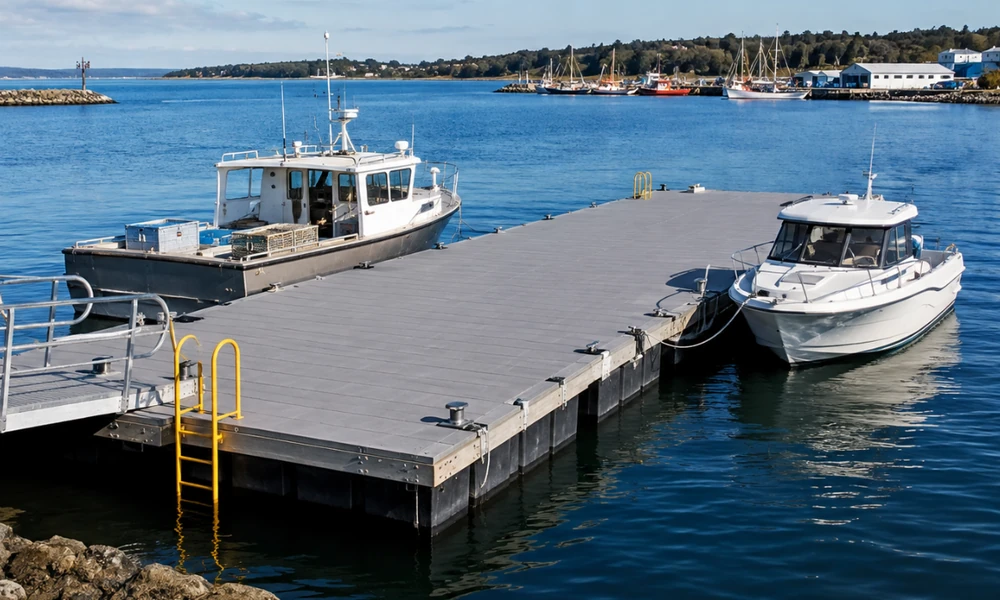
Floating docks are valued for their ability to rise and fall with changing water levels. However, not every floating structure offers the same height, stability, or load capacity. For facilities serving larger boats, frequent passengers, or commercial operations, a high-freeboard floating dock can provide a more practical platform.
Freeboard refers to the vertical distance between the waterline and the top of the dock. A high-freeboard design sits farther above the water than a typical low-profile recreational dock. This additional height can improve accessibility for certain vessels, increase usable buoyancy, and help keep the deck drier.
Benefits for Boat Owners
The deck height of a dock should be compatible with the boats using it. High-freeboard docks often align more naturally with the side decks, boarding gates, or cockpits of larger recreational and working vessels. This alignment can reduce steep steps between the dock and boat.
A higher platform is also less likely to be washed by small waves or passing wakes. Keeping water off the walking surface helps reduce slippery conditions and protects equipment placed on the dock. In busy waterways, the added elevation can make loading passengers, coolers, fuel containers, and other supplies more manageable.
Because high-freeboard docks typically contain substantial flotation, they may offer greater stability under concentrated loads. This is useful when several passengers gather near a boarding point or when heavy gear must be moved across the platform.
Commercial Applications
Commercial waterfront environments place greater demands on floating infrastructure. Marinas, ferry landings, tour operations, service docks, fishing facilities, and waterfront work sites may experience continuous foot traffic and repeated vessel impacts.
A high-freeboard system can provide the capacity required for equipment carts, utility connections, storage boxes, boarding structures, and safety features. Wider configurations can also create clearer circulation routes for workers and passengers.
Modular systems may be arranged as long walkways, finger piers, loading platforms, or equipment stations. Sections can sometimes be reconfigured or expanded as operational needs change, making the dock adaptable to seasonal traffic or future development.
Important Design Considerations
Freeboard alone does not determine whether a dock is suitable for a location. The complete design must account for vessel size, passenger volume, equipment weight, waves, currents, wind, tides, and changing water levels.
Load capacity should include both permanent equipment and temporary loads. Planners must consider how weight will be distributed, especially near gangways, utility cabinets, cranes, fuel systems, or busy boarding zones.
The anchoring system is equally important. Pilings, chains, cables, or other restraints must control movement without preventing the dock from responding to water-level changes. Connections between modules should withstand repeated motion and expected environmental forces.
High-freeboard docks may require longer or specially designed gangways to maintain a comfortable slope. Boarding ladders, handrails, transition plates, edge protection, and adequate lighting can further improve accessibility and safety. Applicable permitting, environmental, accessibility, and building requirements should be reviewed before installation.
Materials and Maintenance
Common dock materials are selected for resistance to moisture, ultraviolet exposure, corrosion, and marine organisms. Decking should provide dependable traction in wet conditions, while floats must maintain buoyancy and resist punctures or impact damage. Fasteners, cleats, brackets, and connectors should be appropriate for freshwater or saltwater exposure.
Routine inspections help keep the system reliable. Operators should check flotation units, anchors, couplers, decking, utilities, ladders, and safety equipment. Loose hardware, damaged surfaces, corrosion, or unusual movement should be addressed promptly.
Choosing the Right Configuration
A successful high-freeboard dock balances height, stability, vessel access, and operational demands. The ideal configuration depends on the site rather than a single standard layout. A careful assessment of environmental conditions, expected loads, traffic patterns, and future use will support a safer and longer-lasting installation.
When properly designed and maintained, a high-freeboard floating dock can provide a stable, dry, and versatile working surface for both private boats and demanding commercial waterfront activities.
This post was written by a professional at Supreme Marine Floating Docks. Supreme Marine Floating Docks is dedicated to providing top-quality floating docks and marine accessories that combine durability, innovation, and superior performance. While we are a new brand, our team brings over 50 years of combined industry experience, making us a trusted name in the marine world. We are passionate about designing and delivering products that meet the highest standards, ensuring reliability and longevity in all marine environments. Whether for residential, commercial, or recreational use, our docks are crafted with precision and care, setting a new benchmark in the industry. At Supreme Marine, we aren’t just floating dock builders Ft Lauderdale -we create lasting solutions.
