

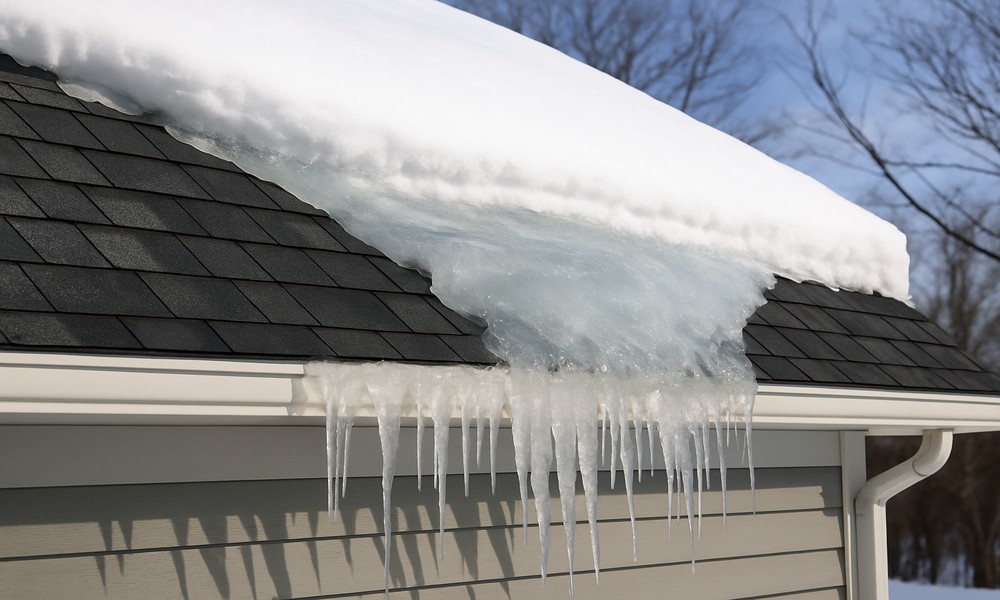
Winter arrives with a quiet beauty. The soft snow covers the world in white. But the cold weather brings hidden dangers. Your home faces many invisible threats during these months. Most people watch for heavy snow loads. However, the real trouble often hides beneath the surface. You might notice small icicles first. These frozen spikes look pretty in the morning light. They actually signal a deeper struggle with heat loss. The roof becomes a battlefield for temperature changes. Now you must understand these complex winter cycles. Proper knowledge keeps your family safe and dry. Stratus Roofing wants to help you protect your investment today.
The Secret Physics of Melting Snow
Heat rises from your warm living spaces. This energy travels through the attic space quickly. It warms the wooden roof deck from below. Sometimes, the snow begins to melt against the shingles. The water flows down toward the cold eaves. The edges of the roof remain freezing cold. This liquid turns into solid ice very fast. A thick barrier starts to form along the gutters. This ridge prevents more water from draining away. Now the trapped liquid pools behind the ice wall. It finds tiny gaps in the roofing material. This process happens quietly during the coldest nights. You might not see the damage for weeks.
The Hidden Danger of Interior Leaks
Trapped water eventually finds a way inside. The liquid pushes under the asphalt shingles easily. It seeps into the wooden structural beams below. Sometimes, you see yellow stains on the ceiling. These marks indicate a serious moisture problem. The insulation in your attic becomes soaked quickly. Wet insulation loses its ability to hold heat. Now your furnace must work much harder. This cycle creates even more roof heat. The ice dam grows larger every single day. You might experience peeling paint near the windows. This moisture ruins the drywall and the wooden framing. Stratus Roofing recommends checking your attic for damp spots.
Unexpected Ventilation and Airflow Issues
Your roof needs to breathe during the winter. Cold air should circulate through the attic space. This airflow keeps the roof deck very cold. But blocked vents cause the attic to overheat. Snow often covers the intake vents near eaves. Now the stagnant air traps the rising heat. This imbalance speeds up the ice dam process. You must ensure the vents remain clear always. Sometimes, squirrels or birds build nests in vents. These obstructions prevent the necessary cooling of the deck. A professional rooftop snow removal service can identify these blocks. Proper ventilation saves the roof from early failure. Clear paths allow the house to stay healthy.
